
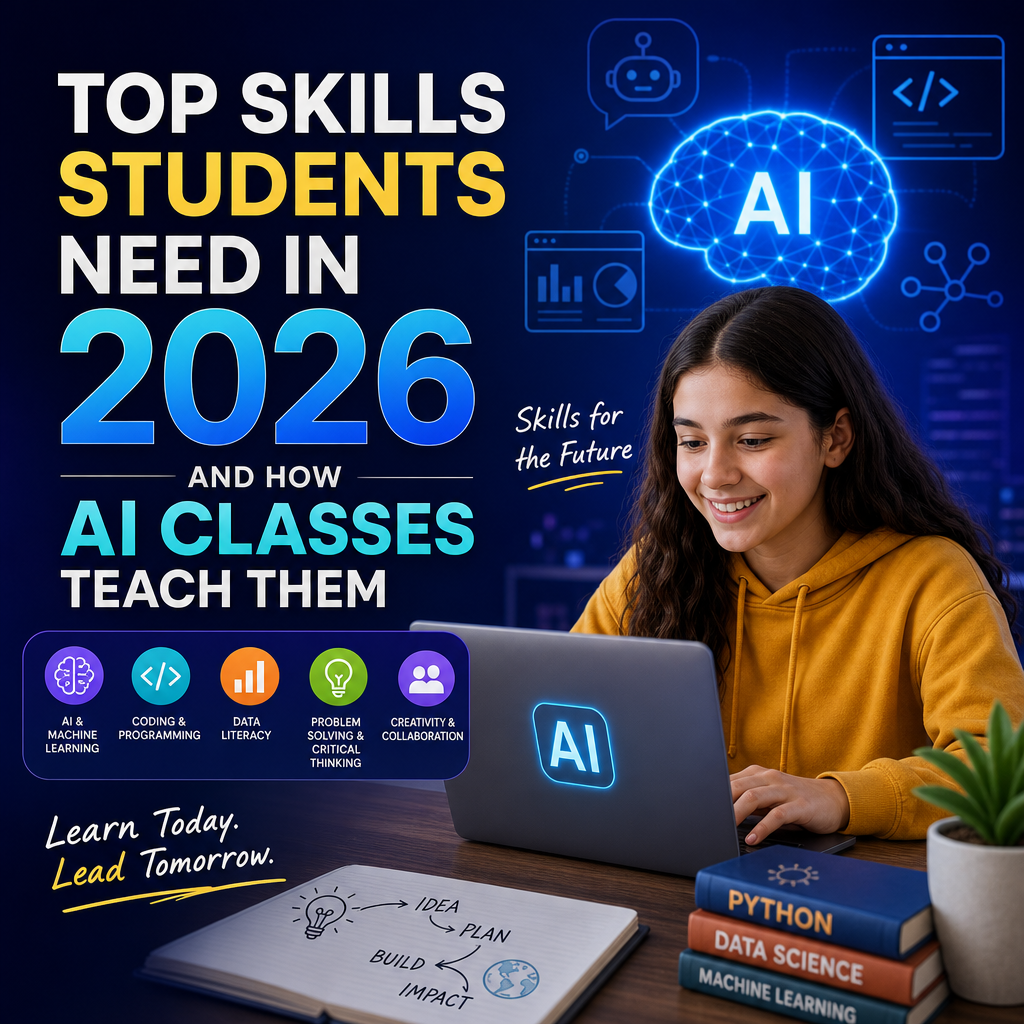
Top Skills Students Need in 2026 and How AI Classes Teach Them
The Top Skills Students Need in 2026 — And How AI Classes Teach Them
The world students are preparing for in 2026 looks very different from the one schools were built for.
Technology is changing how people work, communicate, and solve problems. Employers are no longer looking only for degrees or test scores. They want adaptable thinkers who can learn quickly, work with technology, and make smart decisions in fast-moving environments.
That is why AI classes are becoming more important in modern education. They do more than teach students how artificial intelligence works. They help build the real-world skills students need to succeed in college, careers, and everyday life.
Why Skills Matter More Than Ever in 2026
Knowledge is still important, but access to information is now instant. What matters more is what students can do with that information.
In 2026, the most valuable students will be the ones who can:
- think critically
- communicate clearly
- solve unfamiliar problems
- work well with others
- use technology responsibly
- keep learning as tools and industries change
AI classes create a natural environment for building these abilities because they combine technology, creativity, logic, and ethics in one subject.
1. Critical Thinking
One of the top skills students need in 2026 is critical thinking.
Students are surrounded by content, data, and digital tools. They need to question what they see, identify patterns, test ideas, and make informed decisions. AI classes often ask students to examine how a model works, why it makes certain predictions, and where errors or bias might appear.
Instead of memorizing answers, students learn to ask better questions, such as:
- What data is this system using?
- Is the output accurate?
- What assumptions are built into the model?
- Who might be affected by the result?
This kind of thinking prepares students for far more than tech careers. It helps them become thoughtful learners and responsible decision-makers.
2. Problem-Solving
AI is built around solving problems.
In AI classes, students do not simply consume technology. They learn how to break a challenge into smaller steps, identify possible solutions, test them, and improve their approach. That process mirrors the way many real jobs work today.
For example, a student might be asked to build a simple chatbot, classify images, or design a system that recommends music or books. To do that successfully, they must understand the goal, evaluate the data, and refine their model when things go wrong.
This teaches resilience as well as technical skill. Students learn that failure is part of learning, and improvement comes through iteration.
3. Digital Literacy
Digital literacy in 2026 goes far beyond knowing how to use apps or search online.
Students need to understand how digital systems shape the information they receive and the choices they make. AI classes help students explore how algorithms influence social media feeds, search results, online shopping, and even hiring tools.
That awareness is powerful.
When students understand how AI tools work, they become more confident and more cautious. They are better able to use technology productively without being controlled by it. They also develop a healthier relationship with digital tools by seeing them as systems to understand, not just platforms to use.
4. Creativity
Many people assume AI reduces creativity, but strong AI classes often do the opposite.
When students use AI to generate ideas, organize information, or test concepts, they can spend more time on creative thinking. They begin to explore how human imagination works alongside machine assistance.
In a classroom setting, students might:
- design AI-powered projects
- create original prompts and outputs
- build interactive stories or games
- use data to develop new solutions to old problems
Creativity in 2026 is not just about art. It is about innovation. Students who can combine imagination with technology will stand out in almost every field.
5. Collaboration and Communication
The future of work is highly collaborative, and students need to be ready for that.
AI classes often include group projects where students share roles, explain technical ideas, and solve problems together. One student may focus on data, another on coding, and another on presentation or ethics. This reflects the way real teams operate in modern workplaces.
Just as important, students learn how to communicate complex ideas in simple terms. That is a major advantage in any profession.
Being able to explain what an AI system does, what its limits are, and why it matters is a skill that blends technical understanding with clear communication.
6. Ethical Thinking and Responsibility
As AI becomes more common, ethical thinking is no longer optional.
Students in 2026 will need to consider fairness, privacy, bias, and accountability whenever technology is involved. AI classes introduce these topics early, helping students understand that innovation should come with responsibility.
This is one of the biggest benefits of AI education. It teaches students not only how to build tools, but how to think about their impact.
Questions like these become central:
Who benefits from this technology?
Who could be harmed by it?
Is the system fair and transparent?
These discussions help students become more responsible citizens, not just more skilled users of technology.
How AI Classes Prepare Students for the Future
The real strength of AI classes is that they blend technical learning with human skills.
Students gain hands-on experience, but they also build habits that matter in every path they may take:
- curiosity
- adaptability
- confidence with new tools
- thoughtful decision-making
- lifelong learning
That combination is exactly what the future demands.
Final Thoughts
The top skills students need in 2026 are not limited to coding or computer science. They include critical thinking, creativity, collaboration, digital literacy, and ethical judgment.
AI classes are uniquely positioned to teach all of them at once.
As education evolves, schools that invest in AI learning are not just keeping up with technology. They are helping students become capable, flexible, and future-ready in a world where those qualities matter most.