
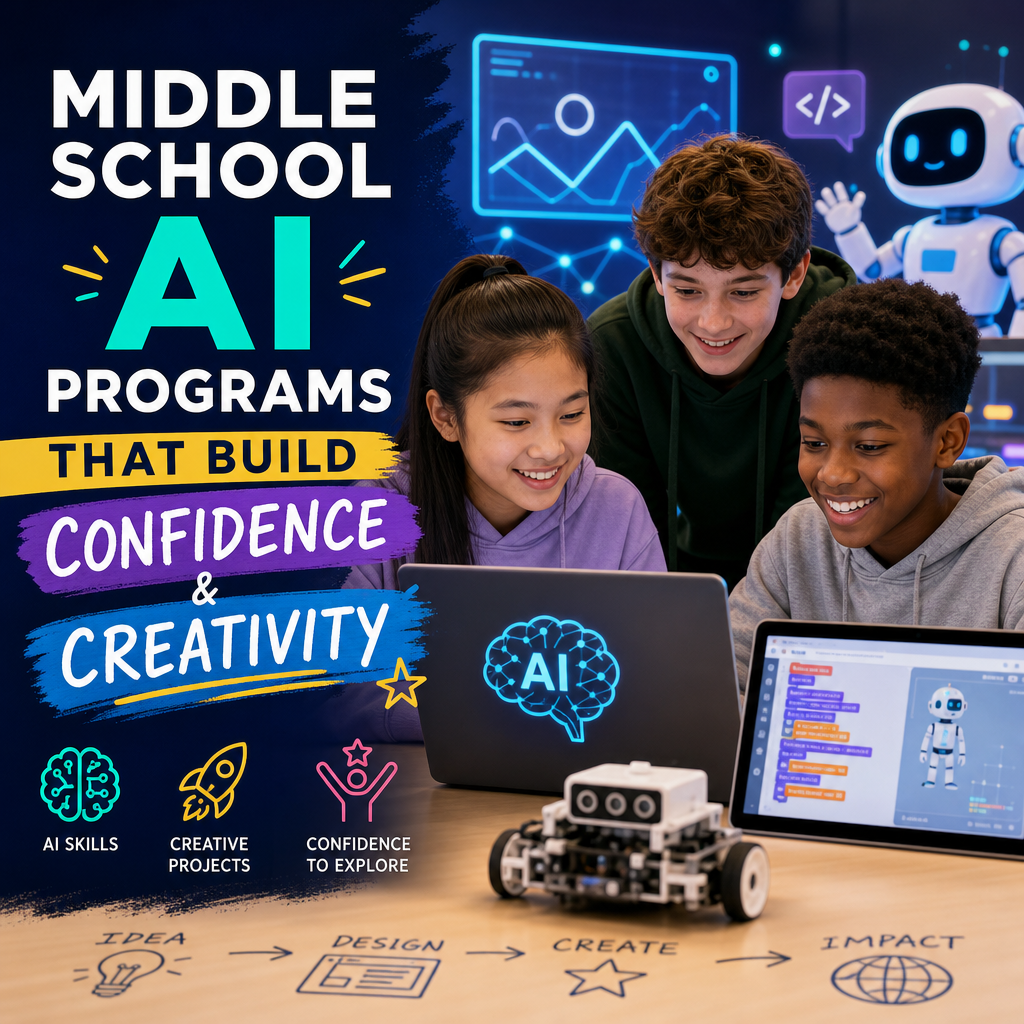
Middle School AI Programs That Build Confidence and Creativity
Middle School AI Programs That Build Confidence and Creativity
Middle school is a time when students begin to discover what they enjoy, what they are good at, and how they want to express themselves. It can also be a stage filled with self-doubt. That is why middle school AI programs are becoming so valuable. When designed well, these programs do more than introduce new technology. They help students build confidence, think creatively, and see themselves as capable problem-solvers.
AI may sound advanced, but for middle school students, it can be introduced in ways that feel playful, approachable, and inspiring. The best programs focus less on technical complexity and more on exploration, imagination, and real-world relevance.
Why AI Matters in Middle School
Students in middle school are naturally curious. They ask big questions, test limits, and enjoy experimenting. AI fits that mindset well because it encourages students to explore how technology works and how it can be used to solve problems.
Instead of only consuming technology, students learn to shape it.
That shift matters. When students realize they can create with AI rather than simply use apps and devices, they often become more engaged in learning. They begin to see themselves as builders, designers, and innovators.
How AI Programs Build Confidence
Confidence grows when students feel successful, supported, and free to try new ideas. Middle school AI programs can create those conditions in several ways.
1. They Make Complex Ideas Feel Achievable
Strong programs break AI into manageable steps. Students might start by training a simple image recognition model, creating a chatbot, or exploring pattern detection in everyday examples.
These early wins are important.
When students can say, “I made this work,” they begin to trust their own abilities. Even students who do not usually see themselves as “tech kids” can find success in hands-on AI activities.
2. They Reward Curiosity Over Perfection
AI projects often involve testing, adjusting, and trying again. That process helps students understand that mistakes are not failures. They are part of learning.
This mindset can be especially powerful in middle school, when fear of being wrong sometimes keeps students from participating. AI learning environments that celebrate experimentation help students become more willing to take risks.
3. They Give Students a Voice
Many AI activities invite students to choose a topic, design a solution, or create something original. That ownership boosts confidence because students feel their ideas matter.
For example, a student might build an AI-based project around:
- music recommendations
- wildlife protection
- school lunch choices
- mental wellness
- helping new students navigate campus
When projects connect to personal interests, students are more motivated and more proud of the results.
How AI Programs Encourage Creativity
Creativity is not separate from technology. In fact, the best middle school AI programs treat creativity as a core part of learning.
AI Supports Imagination
Students can use AI to brainstorm stories, generate artwork prompts, analyze environmental data, or design simple interactive tools. These projects combine logic with imagination, which helps students see that STEM and creativity belong together.
A student who loves art may explore AI-generated visuals.
A student who enjoys writing may create a storytelling assistant.
A student interested in social impact may design an AI idea that addresses a community challenge.
This variety helps more students find an entry point.
Creativity Grows Through Problem-Solving
AI is not just about building models. It is about asking thoughtful questions.
Programs that encourage students to identify a problem and imagine a solution naturally strengthen creative thinking. Students learn to look at challenges from different angles, test new ideas, and improve their work over time.
That kind of creativity goes far beyond the classroom.
What Makes a Great Middle School AI Program?
Not every program has the same impact. The most effective ones are designed with middle school learners in mind.
Key features to look for include:
- Hands-on projects that let students create, test, and revise
- Beginner-friendly tools with minimal technical barriers
- Collaborative learning that encourages teamwork and discussion
- Ethics conversations about fairness, privacy, and responsible technology use
- Creative freedom so students can connect projects to their interests
- Supportive instruction that makes students feel safe asking questions
Programs that combine these elements are more likely to help students grow both technically and personally.
The Importance of a Supportive Environment
The technology itself is only part of the equation. The environment matters just as much.
Students thrive when adults frame AI as something they can explore without pressure. Teachers and program leaders should emphasize discovery, not perfection. They should also highlight diverse role models in tech so students from all backgrounds can imagine themselves in these spaces.
Confidence grows faster when students feel seen.
It also helps when programs encourage collaboration instead of competition. Working in pairs or teams allows students to share ideas, solve problems together, and realize they are not alone when something feels challenging.
Preparing Students for the Future
Middle school AI programs are not just about preparing students for future jobs, though they certainly help with that. They are about helping young people develop the confidence to engage with a changing world.
AI is already shaping how people learn, work, create, and communicate. Students need more than awareness of this technology. They need the belief that they can understand it, question it, and use it thoughtfully.
That belief starts early.
Final Thoughts
The strongest middle school AI programs do more than teach digital skills. They help students discover their voice, trust their ideas, and approach challenges with curiosity. By combining hands-on learning with creative exploration, these programs give students something especially valuable during the middle school years: confidence in their ability to learn, create, and contribute.
When that happens, AI becomes more than a subject. It becomes a pathway to self-expression, innovation, and growth.