
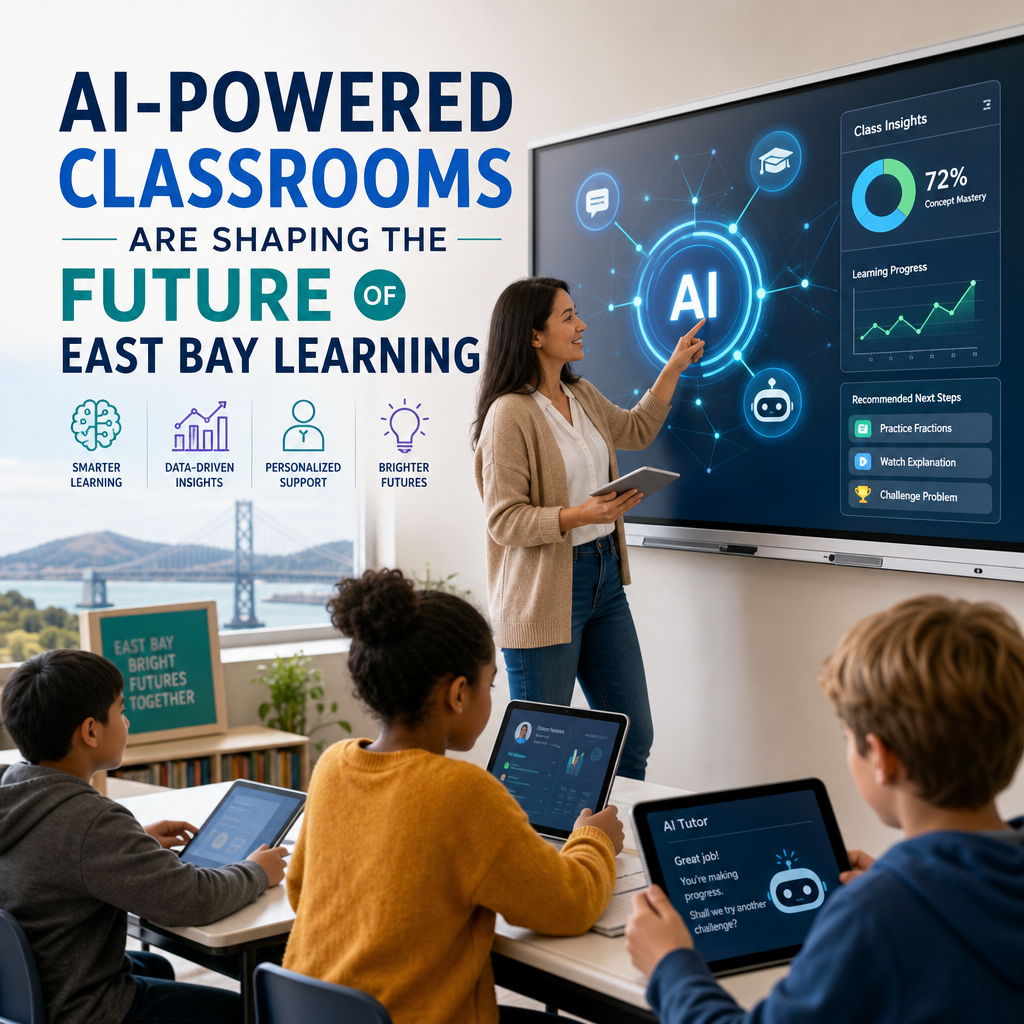
AI-Powered Classrooms Are Shaping the Future of East Bay Learning
The Future of Learning: AI-Powered Classrooms in the East Bay
Across the East Bay, classrooms are beginning to look very different from just a few years ago. Laptops and tablets are no longer the newest additions. Today, schools are exploring tools that can personalize lessons, support teachers, and help students learn in ways that feel more immediate and engaging. At the center of this shift are AI-powered classrooms.
From Oakland to Walnut Creek, educators are asking the same question: how can artificial intelligence improve learning without losing the human connection that makes great teaching possible? The answer is still evolving, but the direction is clear. The future of learning in the East Bay will be shaped by schools that use technology thoughtfully, creatively, and responsibly.
What AI-Powered Classrooms Really Mean
When people hear “artificial intelligence,” they often imagine robots teaching students. In reality, AI-powered classrooms are much more practical.
AI in education often includes tools that can:
- Adjust reading or math exercises based on student progress
- Provide instant feedback on assignments
- Help teachers identify students who may need extra support
- Translate materials for multilingual families and students
- Assist with lesson planning and administrative tasks
Rather than replacing educators, these systems are designed to support them. In many cases, AI helps teachers spend less time on repetitive work and more time focusing on instruction, relationships, and individual student needs.
Why the East Bay Is Ready for This Shift
The East Bay is known for its diversity, innovation, and strong connection to the wider Bay Area tech ecosystem. That makes it a natural place for educational change.
Local schools serve students from a wide range of cultural, linguistic, and economic backgrounds. Because of that, one-size-fits-all instruction can be limiting. AI-powered classrooms offer the possibility of more personalized learning paths, which can be especially valuable in districts where student needs vary widely.
At the same time, East Bay families and educators are often deeply engaged in conversations about equity, access, and ethics. That matters. Adopting AI in schools is not just about using the latest tools. It is about deciding how those tools can serve students fairly and effectively.
How Students Could Benefit
For many students, AI can make learning feel more responsive.
A student struggling with algebra may receive extra practice at the right level instead of falling behind. A strong reader may be challenged with more advanced material rather than waiting for the rest of the class to catch up. English learners may use AI-based translation and language support tools to better understand lessons in real time.
Some of the biggest potential benefits include:
Personalized Learning
AI can analyze patterns in student performance and adapt instruction to match individual needs. This can help students move at a pace that works for them.
Faster Feedback
Instead of waiting days for corrections, students can get immediate responses on quizzes, writing prompts, or practice exercises. That quick feedback loop can improve confidence and retention.
Greater Accessibility
Speech-to-text tools, reading assistants, and language support can make classrooms more inclusive for students with disabilities and multilingual learners.
What This Means for Teachers
Teachers remain the most important part of the classroom. AI is most powerful when it acts as a support system, not a substitute.
In East Bay schools, educators are already balancing large class sizes, wide learning differences, and increasing demands on their time. AI tools can help by handling tasks like grading simple assignments, organizing data, or generating draft lesson materials.
That can create more room for the work teachers do best:
- Building trust with students
- Leading discussion and critical thinking
- Supporting social and emotional growth
- Adapting instruction based on real classroom dynamics
The future of learning depends not just on smart technology, but on empowered teachers who know how to use it well.
The Challenges Schools Must Address
AI-powered classrooms also bring real concerns, and East Bay communities are right to take them seriously.
Equity and Access
Not every student has the same access to devices, fast internet, or tech support at home. If schools are not careful, AI could widen existing gaps instead of closing them.
Data Privacy
AI systems often rely on large amounts of student data. Schools must be transparent about what is collected, how it is used, and who has access to it.
Bias and Accuracy
AI tools are only as good as the data and systems behind them. If those systems reflect bias or produce unreliable information, students can be affected.
Teacher Training
Even the best tools can fall short if educators are not given enough time and support to learn how to use them effectively.
What the Future Could Look Like
The most successful AI-powered classrooms in the East Bay will likely be the ones that keep people at the center of every decision.
That means schools may invest in:
- Professional development for teachers
- Clear privacy and ethics policies
- Community input from families and students
- Technology that supports, rather than dictates, learning
In the years ahead, AI may help create classrooms that are more adaptive, inclusive, and efficient. But the goal should never be automation for its own sake. The real goal is better learning outcomes and stronger support for every student.
A Human Future for AI in Education
The future of learning in the East Bay is not just about software, screens, or algorithms. It is about giving students more opportunities to succeed and giving teachers better tools to help them get there.
AI-powered classrooms have enormous potential, but their success will depend on how thoughtfully schools implement them. With the right balance of innovation, oversight, and human connection, the East Bay can become a model for what modern education should look like: personalized, equitable, and deeply rooted in the needs of real learners.