
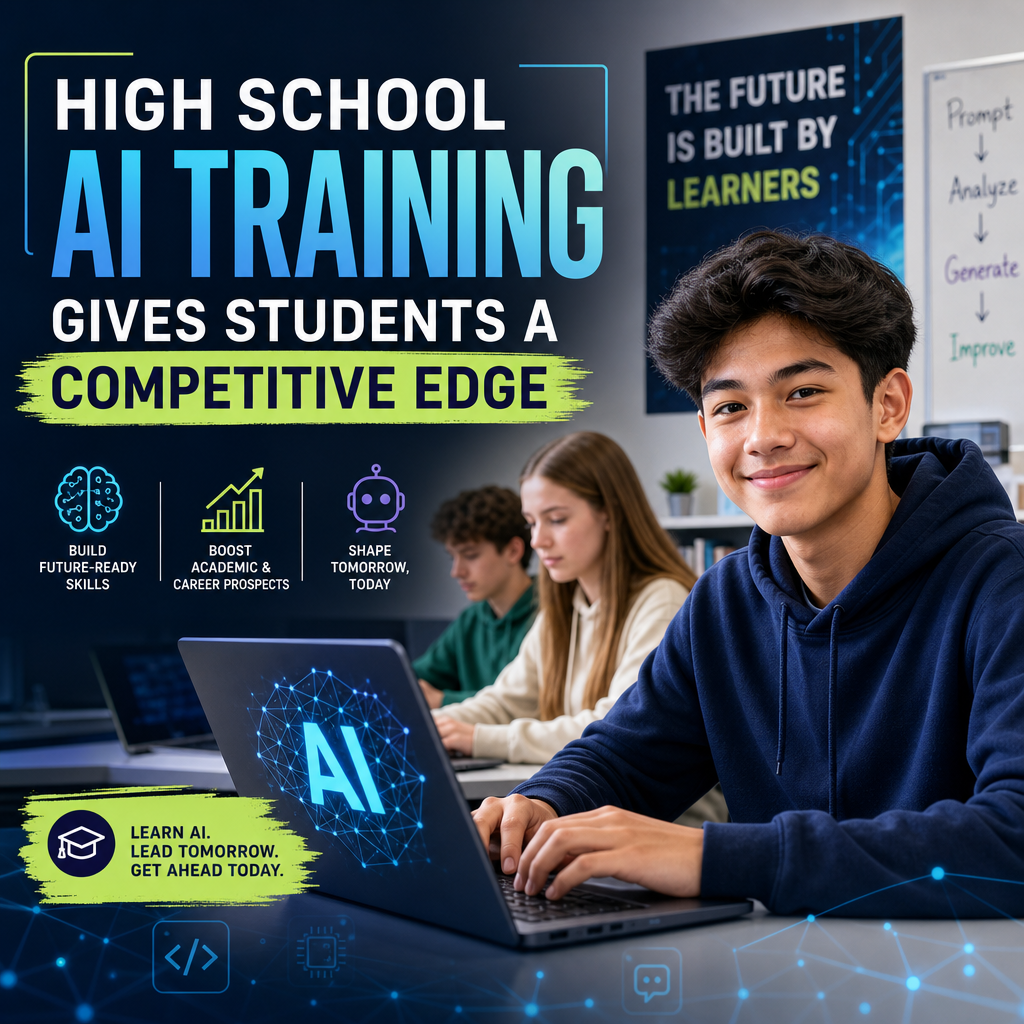
High School AI Training Gives Students a Competitive Edge
High School AI Training That Gives Students a Competitive Edge
Artificial intelligence is no longer a future concept reserved for tech companies and university labs. It is already shaping how people work, communicate, create, and solve problems. That is why high school AI training is becoming one of the most valuable opportunities students can access today.
When students learn how AI works before college, they gain more than technical knowledge. They build confidence, strengthen critical thinking, and prepare for a world where AI literacy matters in nearly every industry. From business and healthcare to design and engineering, students with early exposure to AI are better equipped to stand out.
Why AI Education Matters in High School
High school is the ideal time to introduce AI concepts because students are developing academic interests and beginning to think seriously about future careers. A strong foundation in AI can help them make smarter choices about college programs, internships, and job paths.
More importantly, AI education teaches students to think beyond simply using technology. It helps them understand:
- How algorithms make decisions
- How data influences outcomes
- Why bias and ethics matter
- How to use AI tools responsibly
- How automation is changing the workforce
These lessons are practical, relevant, and increasingly necessary.
More Than Coding: Building Real-World Skills
Many people assume AI training is only for students who want to become programmers. In reality, the benefits go much further. High school AI training develops transferable skills that are useful in almost any field.
Problem-Solving and Analytical Thinking
AI projects often require students to break down problems into smaller parts, test ideas, and improve results over time. This process strengthens logical thinking and teaches persistence.
Creativity and Innovation
AI is not just about math and code. Students can use AI for creative tasks such as designing apps, generating media, analyzing trends, or building solutions for school and community challenges.
Communication and Collaboration
Many AI learning experiences involve teamwork. Students learn how to explain ideas clearly, share responsibilities, and present solutions to others. These are essential skills in both college and the workplace.
How High School AI Training Gives Students an Edge
Students who receive AI training early often have a noticeable advantage over their peers. That advantage shows up in several ways.
Stronger College Applications
Colleges increasingly value students who demonstrate initiative in emerging fields. Completing AI coursework, certifications, or independent projects can make an application more impressive, especially when paired with examples of problem-solving and leadership.
Career Awareness at an Earlier Stage
AI exposure helps students see how technology connects to different careers. A student interested in medicine might discover AI in diagnostics. A student interested in finance might explore predictive analytics. Early awareness helps students make more informed academic decisions.
Better Digital Literacy
In a world full of AI-powered tools, students need to know how to use technology wisely. High school AI training encourages thoughtful, responsible use rather than passive dependence on tools students do not fully understand.
Readiness for a Changing Job Market
Many future jobs will require at least a basic understanding of AI systems. Students who already know the language of machine learning, data, automation, and ethics will be better prepared to adapt.
What Effective AI Training Should Include
Not all programs are equal. The best high school AI training combines technical learning with practical application and ethical awareness.
Core Concepts
Students should be introduced to foundational topics such as:
- Machine learning basics
- Data collection and analysis
- Natural language processing
- Computer vision
- Automation and algorithms
These concepts do not need to be overly complex. What matters most is that students understand how AI systems function and where they are used.
Hands-On Projects
Project-based learning makes AI more meaningful. Students learn better when they can build something, test ideas, and see results. Projects might include:
- Creating a simple chatbot
- Analyzing trends in a dataset
- Training an image recognition model
- Exploring AI tools for writing, design, or research
Hands-on experience turns abstract ideas into practical skills.
Ethics and Responsibility
Every AI program should address fairness, privacy, misinformation, and bias. Students need to understand not just what AI can do, but what it should do. This awareness gives them a more mature and competitive perspective.
Making AI Accessible to More Students
One of the biggest opportunities in education today is making AI learning accessible to students from all backgrounds. AI should not be limited to elite programs or advanced computer science classes.
Schools can expand access by:
- Offering beginner-friendly AI electives
- Integrating AI topics into existing subjects
- Partnering with online learning platforms
- Encouraging clubs, competitions, and workshops
- Providing mentorship from educators and industry professionals
When schools make AI approachable, more students can discover their strengths and interests.
The Competitive Edge Starts Early
The value of high school AI training is not just about keeping up with technology. It is about giving students the tools to think critically, adapt quickly, and lead confidently in a rapidly changing world.
Students who understand AI are not simply learning a trend. They are developing skills that can shape their academic success and future careers. They become better problem-solvers, more informed digital citizens, and stronger candidates for college and work opportunities.
As AI continues to influence every major industry, students who start learning now will be in a much stronger position tomorrow. That is the real competitive edge.