
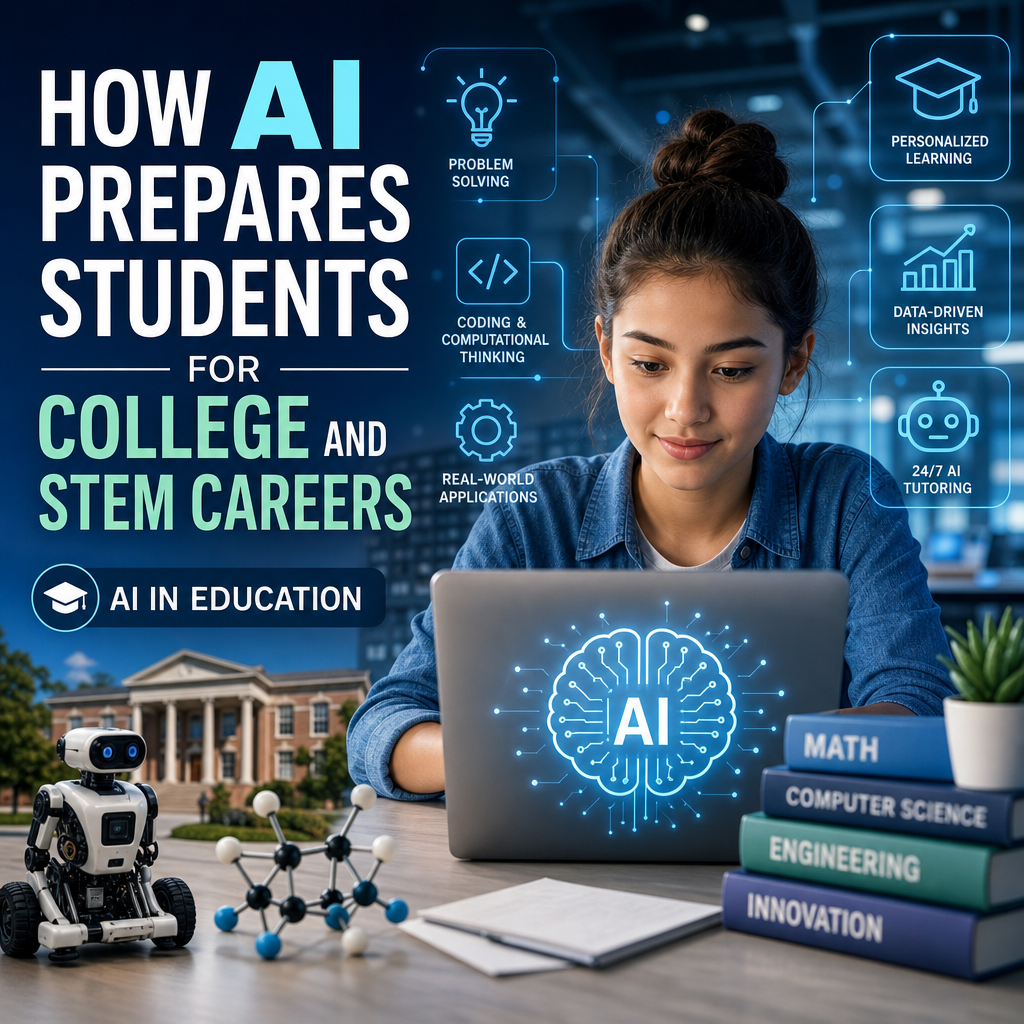
How AI Prepares Students for College and STEM Careers
Why AI Matters for College and STEM Readiness
Artificial intelligence is changing how students learn, explore careers, and prepare for life after high school. From personalized tutoring to career discovery tools, AI in education is becoming a practical support system for students who want to succeed in college and enter STEM fields with confidence.
For many learners, the path to college and a science, technology, engineering, or math career can feel overwhelming. There are advanced subjects to master, standardized tests to prepare for, and major decisions about future goals. AI can help make that journey more manageable, more personalized, and more accessible.
How AI Supports Personalized Learning
Every student learns differently. Some need extra time with algebra, while others are ready to move ahead in coding or biology. AI-powered learning platforms can analyze performance in real time and adjust lessons based on a student’s strengths and challenges.
This kind of personalization offers several benefits:
- Targeted practice in weak areas
- Faster feedback on assignments and quizzes
- Learning paths that match a student’s pace
- More confidence through gradual skill-building
For students interested in STEM careers, this matters even more. Subjects like math, physics, and computer science often build on earlier concepts. If a student misses a foundational skill, later coursework becomes much harder. AI tools can identify those gaps early and help students stay on track.
Building Stronger College Readiness Skills
College success requires more than good grades. Students also need time management, independent study habits, research skills, and the ability to ask the right questions. AI can support these areas in practical ways.
Smarter Study Support
AI study tools can help students create review plans, summarize difficult readings, generate practice questions, and explain complex concepts in simpler language. Instead of spending hours wondering where to begin, students can start with a clearer plan.
Writing and Communication Help
Strong writing is essential in both college and STEM fields. AI can assist students by:
- Suggesting clearer sentence structure
- Helping organize essays and lab reports
- Identifying grammar and style issues
- Encouraging revision instead of one-draft writing
Used correctly, these tools do not replace learning. They support it. Students still need to think critically, develop their own ideas, and understand what they submit.
Expanding Access to STEM Exploration
One of the most exciting roles of AI in education is how it introduces students to STEM opportunities they may not have considered before. Many students are interested in science or technology but do not know what careers exist beyond a few familiar job titles.
AI-powered career platforms can connect student interests, strengths, and academic performance with possible pathways such as:
- Data science
- Mechanical engineering
- Cybersecurity
- Environmental science
- Biomedical research
- Robotics
- Software development
This exposure can be especially valuable for students in under-resourced schools where access to counselors, advanced STEM classes, or career mentoring may be limited. AI tools can help close that gap by offering guidance, examples, and next steps.
AI as a Practice Partner for STEM Skills
STEM careers often require hands-on problem-solving. AI can simulate that experience in ways that are interactive and less intimidating.
Virtual Labs and Simulations
Students can use AI-enhanced platforms to explore chemistry experiments, engineering design challenges, and coding exercises in a digital environment. These tools allow learners to test ideas, make mistakes, and try again without needing expensive equipment.
Immediate Feedback in Technical Subjects
In areas like programming and math, fast feedback is critical. AI can point out errors, explain why a solution did not work, and suggest a better method. That kind of support encourages persistence, which is one of the most important traits in STEM success.
Important Limits and Ethical Considerations
While AI offers major benefits, it should not be treated as a perfect answer. Students still need teachers, mentors, and real human guidance. AI can support learning, but it cannot replace the value of classroom discussion, encouragement, or personal connection.
There are also important concerns to keep in mind:
- Overreliance on AI can weaken independent thinking
- Not all AI tools provide accurate information
- Student privacy and data security must be protected
- Access to technology is still unequal across communities
Teaching students how to use AI responsibly is just as important as giving them access to the tools. They need to learn how to verify information, think critically, and use AI as a helper rather than a shortcut.
Preparing Students for the Future
The future of work will likely include AI in nearly every industry, especially in STEM. Students who learn how to work alongside these tools will be better prepared for college classrooms, research settings, and modern workplaces.
That preparation goes beyond technical ability. It includes adaptability, curiosity, and ethical decision-making. When schools use AI thoughtfully, students gain more than academic support. They gain a clearer understanding of how to learn, solve problems, and navigate a changing world.
Final Thoughts
The role of AI in preparing students for college and STEM careers is growing quickly, and its potential is hard to ignore. When used responsibly, AI in education can personalize learning, strengthen college readiness, and open doors to future opportunities.
For students aiming toward STEM, AI is not just a new technology trend. It is a tool that can help them build knowledge, confidence, and direction at a critical stage in their academic journey.