

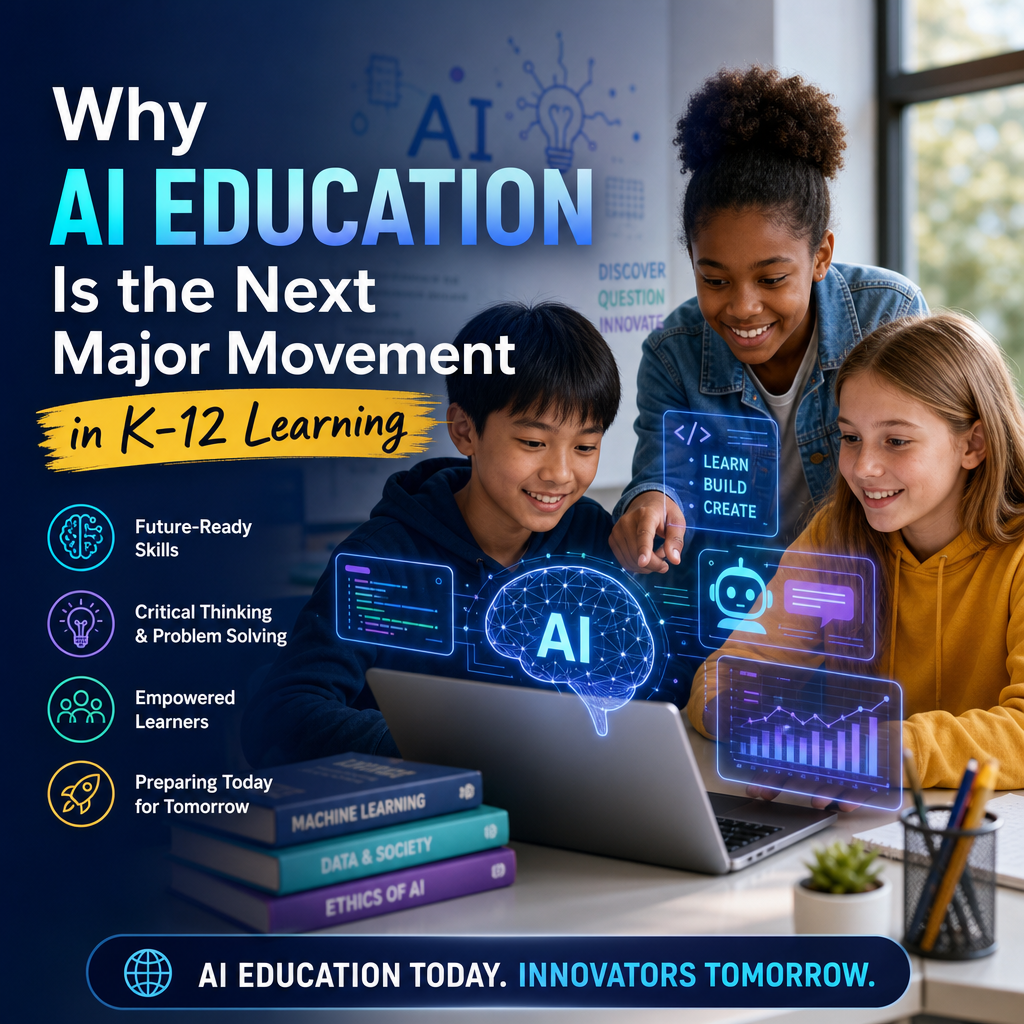
Why AI Education Is the Next Major Movement in K-12 Learning
Why AI Education Is the Next Major Movement in K‑12 Learning
AI education is quickly moving from a niche topic to a core part of modern K‑12 learning. Just as schools once adapted to the internet, coding, and digital literacy, they are now beginning to recognize that artificial intelligence will shape how students learn, work, and participate in society.
This shift is bigger than a technology trend. It is a movement centered on preparing students for a world where AI influences communication, creativity, problem-solving, and decision-making every day.
AI Is Already Part of Students’ Lives
Students do not need to wait until adulthood to encounter AI. They already see it in:
- search engines
- recommendation systems
- voice assistants
- translation tools
- writing and image generators
- adaptive learning platforms
Whether they realize it or not, many children interact with AI daily. That is exactly why AI education matters. Schools have a responsibility to help students understand not only how to use these tools, but also how they work, where they can fail, and what ethical questions they raise.
If students are surrounded by AI, then AI literacy should become as essential as digital literacy.
K‑12 Schools Have a Unique Opportunity
K‑12 education is where habits, skills, and critical thinking begin to take shape. Introducing AI education early gives students time to build understanding step by step, rather than encountering these ideas for the first time in college or the workplace.
At the elementary level, students can explore simple concepts like patterns, predictions, and how computers “learn” from data.
In middle school, they can begin asking deeper questions about algorithms, bias, privacy, and automation.
By high school, students can analyze real-world AI applications, evaluate their impact, and even experiment with creating projects that use machine learning tools responsibly.
This gradual approach helps make AI less intimidating and more meaningful.
AI Education Is About More Than Coding
One common misconception is that AI education is only for future programmers. In reality, it is much broader.
Students do not all need to become engineers. But they do need to understand how AI affects the world around them. That includes:
Critical Thinking
Students should learn to question AI-generated answers, identify misinformation, and recognize that these systems can be wrong.
Ethics and Responsibility
AI raises important issues around fairness, bias, privacy, authorship, and accountability. These topics belong in classrooms because they affect everyone, not just technical experts.
Creativity and Communication
AI tools are increasingly used in writing, art, design, and media. Students need guidance on using them thoughtfully, without replacing original thinking.
Career Readiness
Many future jobs will involve working alongside AI. Even students in non-technical fields will benefit from understanding its strengths and limitations.
In this way, AI education connects naturally to science, math, language arts, social studies, and career preparation.
Teachers Need Support, Not Pressure
For AI education to succeed, educators need time, training, and practical resources. Many teachers are curious about AI but feel unsure about where to start. That hesitation is understandable. The technology is moving quickly, and school systems are still developing policies and best practices.
The goal should not be to ask every teacher to become an AI expert overnight.
Instead, schools can support teachers by offering:
- professional development focused on AI literacy
- clear classroom guidelines for AI use
- age-appropriate lesson plans
- opportunities for collaboration across subjects
- ongoing conversations about ethics and safety
When teachers feel supported, they are better able to guide students through both the opportunities and challenges of AI.
Equity Must Be Part of the Conversation
If AI education becomes a major movement in K‑12 learning, it must be accessible to all students. Otherwise, schools risk widening the digital divide.
Some districts already have strong technology programs, while others struggle with limited devices, internet access, or staff training. That gap matters. Students in every community deserve the chance to build AI literacy, not just those in well-funded schools.
Equity also matters in the curriculum itself. Students should learn that AI systems can reflect bias in the data they are trained on. Teaching this openly helps students become more informed and empowered users of technology.
A strong AI education strategy should focus on inclusion from the beginning.
The Best Time to Start Is Now
Schools do not need to wait for a perfect plan before introducing AI education. Small, thoughtful steps can make a real difference.
A school might begin by:
- adding AI literacy discussions to existing digital citizenship lessons
- helping students evaluate AI-generated content
- exploring simple classroom examples of algorithms and data
- creating policies for responsible AI use
- giving teachers space to experiment and learn together
The key is to start with purpose. AI education should not be about chasing trends. It should be about preparing students to think clearly, act responsibly, and adapt confidently in a changing world.
A Movement That Will Shape the Future
AI education is the next major movement in K‑12 learning because it responds to a real and growing need. Students are entering a future where AI will influence how they learn, create, work, and make decisions. Schools can either treat that reality as optional or prepare students to engage with it wisely.
The better path is clear.
By making AI education part of K‑12 learning, schools can help students become not just users of new technology, but thoughtful, ethical, and capable citizens in an AI-powered world.