

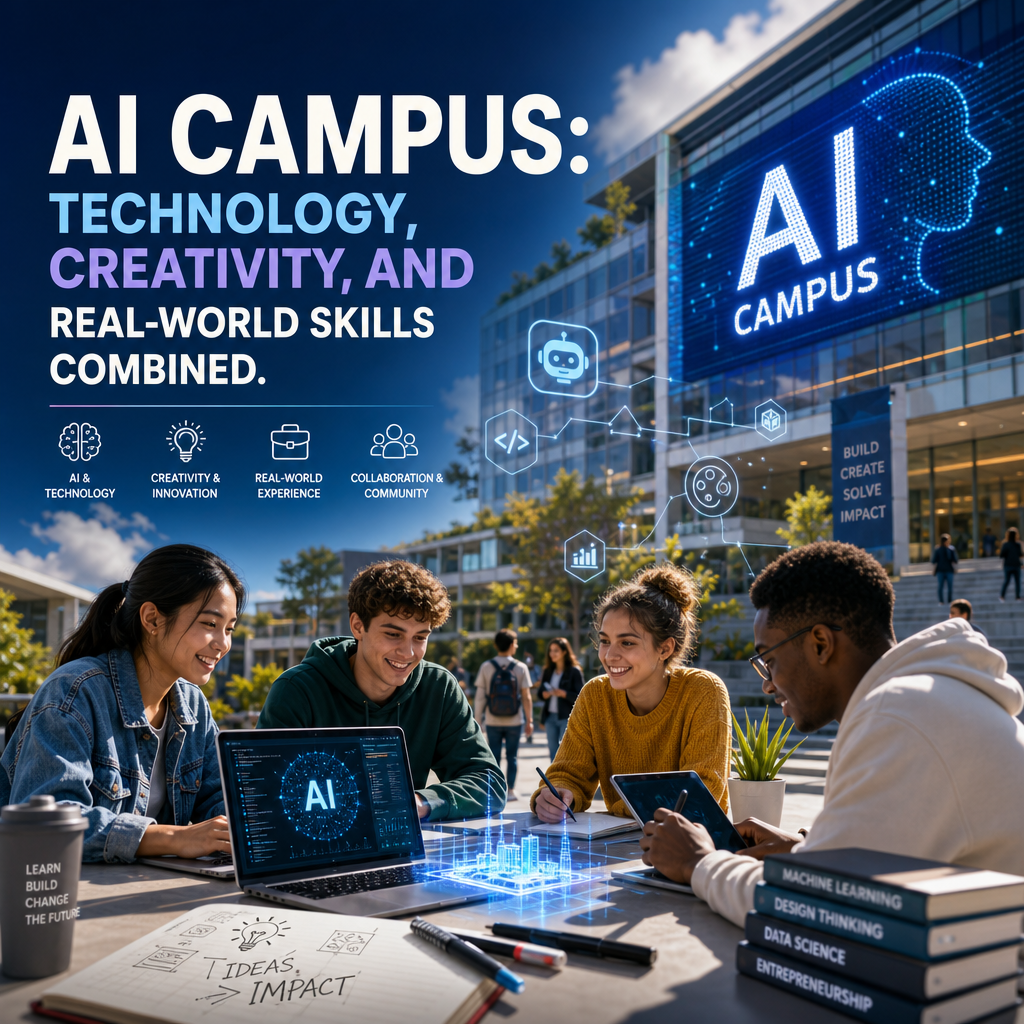
AI Campus: Technology, Creativity, and Real-World Skills Combined
A New Kind of Learning Environment
Education is changing fast, and students need more than theory to succeed. They need technical confidence, creative thinking, and practical experience they can apply in the real world.
That is exactly where our AI campus stands out.
Rather than treating technology as a separate subject, we build it into the full learning experience. Students do not just learn how tools work. They learn how to use them to solve problems, communicate ideas, and create meaningful projects that reflect the world they are entering.
Why an AI Campus Matters Today
Artificial intelligence is already shaping how people work, learn, design, and make decisions. From business and healthcare to media and education, AI is becoming part of everyday life.
A modern learning environment should prepare students for that reality.
Our AI campus is designed to help learners become:
- Technically capable
- Creatively confident
- Professionally prepared
- Adaptable in a changing job market
This approach goes beyond coding or software lessons. It teaches students how to think critically about technology and how to use it responsibly and effectively.
Where Technology Meets Creativity
One of the biggest myths about AI is that it replaces creativity. In our experience, the opposite is true.
When students have access to the right digital tools, they can explore ideas faster, test concepts more easily, and bring their vision to life in new ways. On our AI campus, technology supports the creative process rather than limiting it.
Creative learning in action
Students may use AI-powered platforms to:
- brainstorm project ideas
- design visual content
- improve writing and presentation skills
- analyze data for storytelling
- prototype solutions to real challenges
This helps them see technology as a creative partner, not just a technical system. The result is a learning experience that feels both future-focused and deeply human.
Building Real-World Skills, Not Just Classroom Knowledge
Knowledge is important, but employers and industries are looking for more than academic understanding. They want people who can collaborate, communicate, adapt, and solve problems.
That is why our AI campus places strong value on real-world skills.
Skills students develop every day
Through projects, teamwork, and hands-on tasks, learners build skills such as:
- problem-solving
- digital literacy
- communication
- teamwork
- critical thinking
- project management
- ethical decision-making
These are the abilities that help students move confidently from the classroom into higher education, entrepreneurship, or the workplace.
Learning by Doing
One of the strongest features of our AI campus is its practical, applied approach. Students are not passive learners. They are active participants.
Instead of simply reading about AI, design, or innovation, they work on projects that mirror real-life challenges. This might include developing a concept for a product, using AI tools to improve research, or creating campaigns that combine data, strategy, and storytelling.
What this approach looks like
Our learners often engage in:
- Project-based learning that connects lessons to real situations
- Collaborative work that reflects modern team environments
- Creative experimentation with digital tools and ideas
- Skill-building tasks that encourage independence and initiative
This kind of experience helps students understand not only what to do, but also why it matters.
A Balanced Approach to Innovation
Technology should empower students, not overwhelm them. That is why balance is central to our approach.
Our AI campus does not focus on automation alone. It emphasizes the connection between innovation, human judgment, and ethical responsibility. Students are encouraged to ask important questions:
- When should AI be used?
- How can it support better outcomes?
- What are its limits?
- How do we use it responsibly?
These conversations are essential. They help learners become thoughtful users of technology rather than passive consumers of it.
Preparing Students for the Future
The future of work will reward people who can combine technical ability with creativity and strong interpersonal skills. This is the space where our AI campus is designed to make the biggest difference.
Students leave with more than exposure to new tools. They gain a mindset that prepares them to keep learning, keep adapting, and keep creating.
What makes this model effective
Our approach works because it brings together three essential elements:
1. Technology
Students learn how modern tools work and how to apply them with confidence.
2. Creativity
They develop original ideas, express themselves clearly, and think beyond standard solutions.
3. Real-world skills
They practice the communication, collaboration, and problem-solving skills needed in modern careers.
More Than a Trend
AI in education is not just a trend. It is part of a broader shift in how students prepare for life beyond school.
A strong AI campus recognizes that future success will depend on more than technical knowledge alone. It will depend on the ability to connect ideas, work with others, and use technology with purpose.
That is why our model matters.
By combining technology, creativity, and real-world skills, our AI campus helps students become capable learners today and confident leaders tomorrow.